On this page
1. The problem
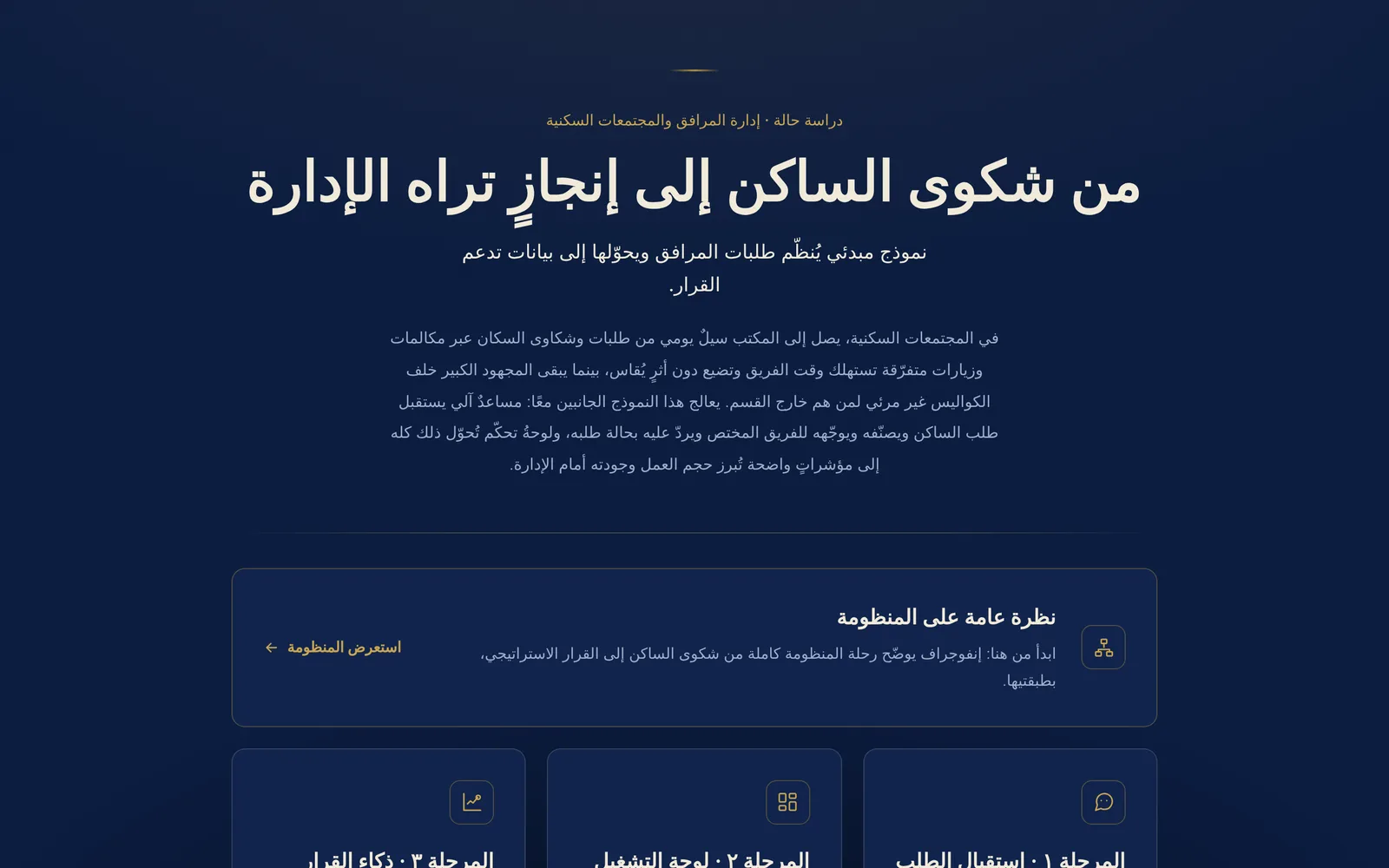
In residential communities, resident requests and complaints arrive through scattered calls and office visits:
- Front-desk pressure. Around a third of requests are walk-ins, and they consume the team's time.
- Lost data. A request gets solved and closed without ever becoming a number anyone can measure.
- Invisible effort. The volume and quality of the facility team's work never reach senior management.
- Decisions without evidence. Equipment is bought from catalogues and contractors are chosen by relationship, not by their actual track record.
2. Approach
- Understand the domain. Studied the challenges facility leaders describe and the standard FM KPIs: SLA compliance, time to resolve, preventive maintenance ratio, resident satisfaction.
- As-Is → To-Be. Mapped today's path (call or visit → manual log → verbal follow-up) and designed the target path (message → automatic classification → routing → ticket → live dashboard).
- Data design. A data model that links each request to its building, category, asset and vendor, so every ticket can be analysed later.
- Prototypes. Generated realistic simulated data with Python and built the interactive prototypes with Claude.
3. The solution: two layers
Layer 1 — Capture and automate
- The resident sends the request on WhatsApp, the channel they already use.
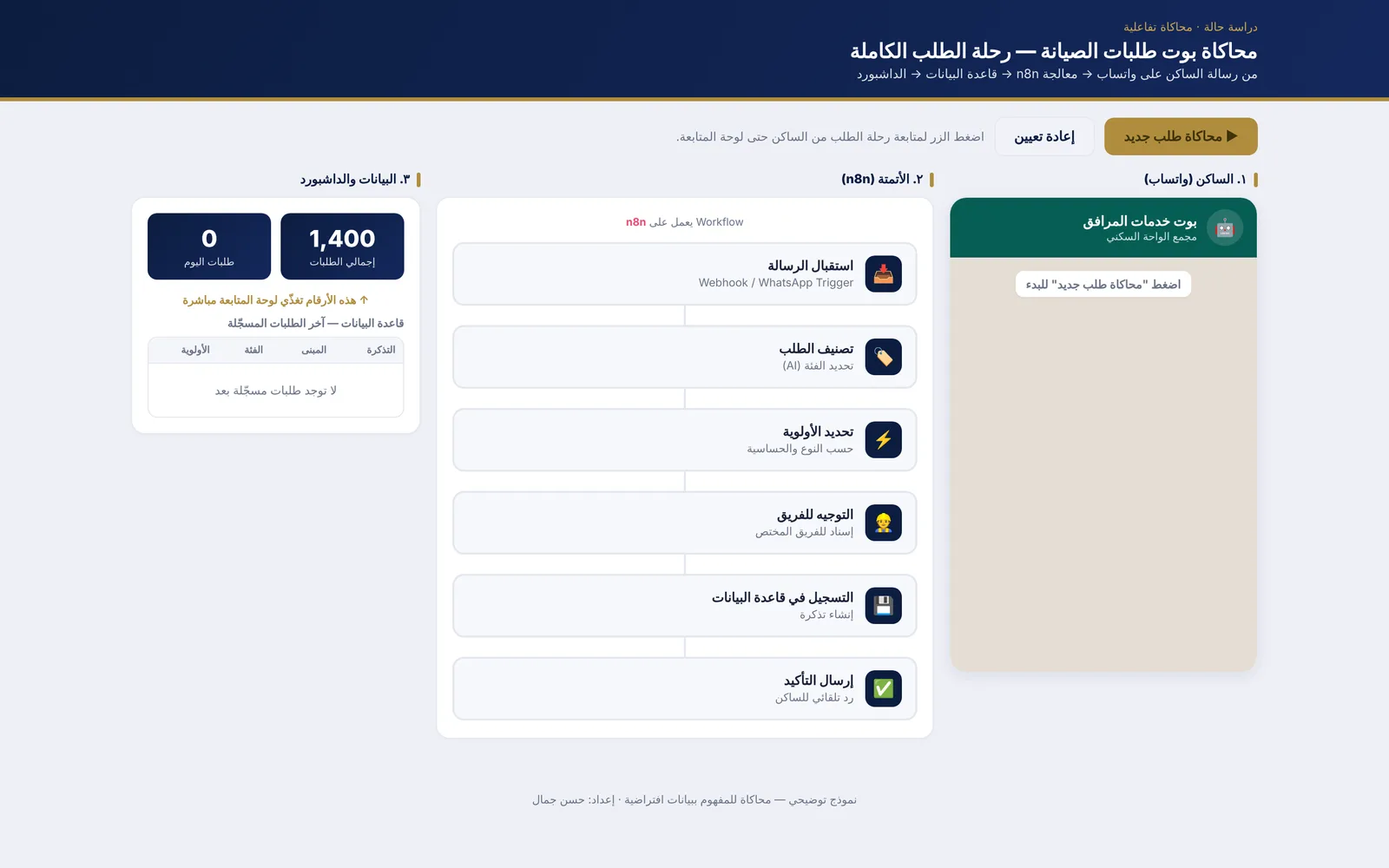
- An n8n workflow receives the message, classifies it, sets the priority and routes it to the right team.
- The request is logged as a ticket, and the resident receives a confirmation with its status and target resolution time.
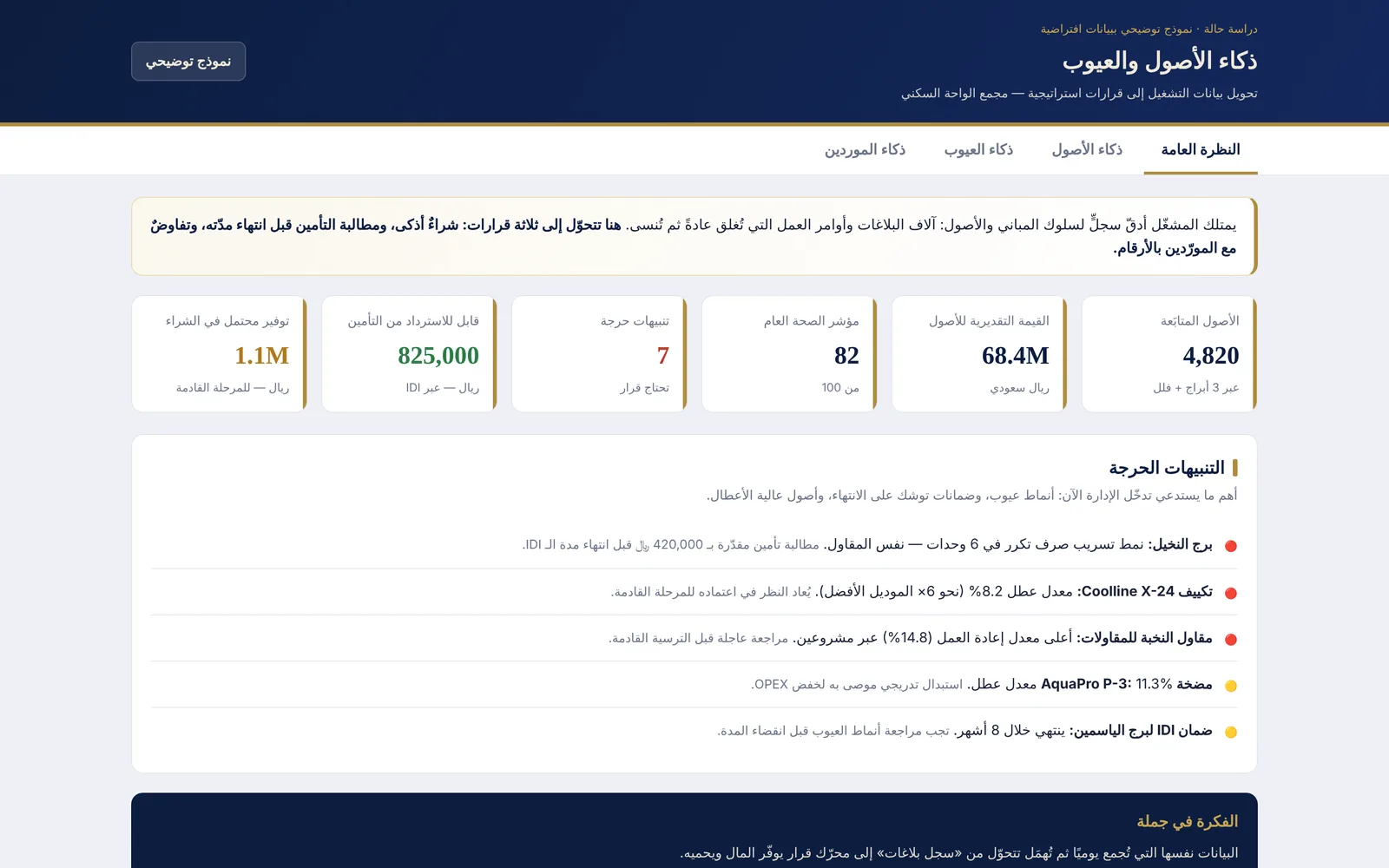
- An operations dashboard shows requests, maintenance, assets and vendors live.
Layer 2 — Intelligence and decisions
- Analyse thousands of requests and work orders to find patterns.
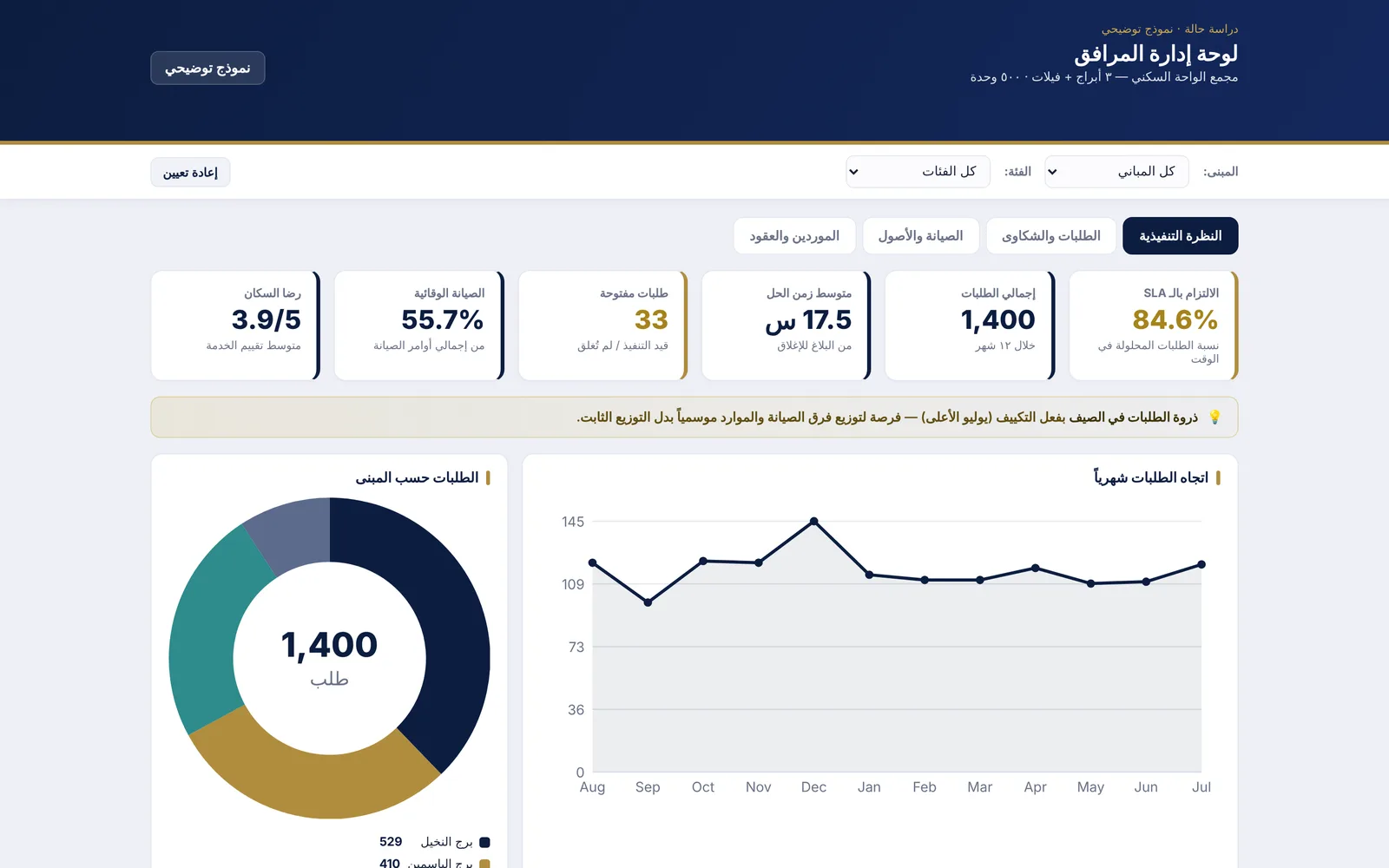
- Turn the patterns into three decisions: - Smarter procurement: the real failure rate of every equipment model. - Insurance recovery: catch latent-defect patterns before the mandatory 10-year Inherent Defects Insurance (IDI) cover in Saudi Arabia expires. - Evidence-based contracting: a vendor scorecard that links rework to defect patterns.
4. The prototypes
| Prototype | What it shows |
|---|---|
| Bot simulation | The full request journey: WhatsApp chat → 6 n8n nodes → database → dashboard counters |
| Operations dashboard | 4 tabs (executive, requests, maintenance & assets, vendors) with building and category filters |
| Asset & defect intelligence | Equipment reliability, defect patterns and insurance claims, vendor scorecard |
Simulated data: a fictional community (3 towers + villas, 500 units) over 12 months: 1,400 requests, 600 work orders, 250 critical assets, 18 vendors.
5. Design decisions
- WhatsApp instead of a new app. Higher adoption and zero training for residents.
- n8n for automation. Fast to build, easy to change, and integrates with WhatsApp and databases without custom development.
- Layer 1 before intelligence. Analysis is worthless before the data is structured; the first layer produces the fuel for the second.
- KPIs that serve management, not technology. Every chart on the dashboard answers a management question and points to a decision.
6. Expected value
- Fewer walk-in requests, moved to a digital channel.
- Higher SLA compliance through instant classification and routing.
- The facility team's workload and quality made visible to management in numbers.
- Procurement, contracting and insurance claims based on an actual record.
7. Limitations and what I would do differently
- The figures come from simulated data; the next step is a pilot on one building with real data to measure actual impact.
- Automatic classification needs its accuracy measured against human classification before it is fully trusted.
- Resident data is personal; any real deployment needs hosting compliant with Saudi Arabia's Personal Data Protection Law.
- I would start with short interviews with the front-desk team before designing, to confirm the most frequent request types.
Skills shown
- Requirements Analysis
- As-Is / To-Be
- KPI Design
- Data Modeling
- Workflow Automation (n8n)
- Dashboard Design
- AI-Assisted Development
- Facility Management
- Python
Open the work
The actual artifacts, not screenshots of them.